The Evolution of Player Incentives: What to Expect from the UK iGaming Market in 2026

Evolutionary pace in digital entertainment barely lets the audience breath, let alone creators, executives, and marketers. The UK’s iGaming market, though, is one of those few sectors able to keep up, with its value projected to reach over US$20 billion by 2033, and its user base pushes it along. Today, the average online player is highly mobile-driven and accustomed to the sophisticated reward loops found in modern video games and e-commerce platforms.
Because of this, the traditional blueprint for customer acquisition is being completely rewritten. Flashy, singular welcome offers to attract attention aren’t all operators rely on. The shift has been to focus on building comprehensive, personalized, and gamified incentive structures. It’s the evolution of these digital perks which industry professionals and consumers are looking into to anticipate the future of online customer retention.
Is Hyper-Personalization the End-Game?
Digital gambling platforms used to pay little attention to individuality, sending each new user the same sign-up incentives. Access to advanced data analytics and AI has opened up new opportunities, allowing operators to look at each user through a unique lens, tailoring rewards directly to player habits.
If a user primarily engages with live dealer blackjack, an algorithm can automatically adjust their incentive track to offer table-game-specific perks rather than generic slot spins. This shift means that when players browse and compare the most competitive UK casino bonuses, they are increasingly looking for platforms that adapt to their specific playstyles over time, rather than settling for rigid, broad-strokes promotions.
The Gamification of the Casino Experience
The modern online gamer – now predominantly aged 25 to 34 – expects a dynamic, interactive experience. To meet this demand, platforms are borrowing heavy inspiration from the video game industry. Standard loyalty point systems are being replaced by interactive “gamified” elements to boost retention, which include:
Interactive Progress Maps
Players take ownership of their journey on a platform. They want to see how close they are to unlocking new VIP tiers and see what tangible rewards are available as they plot their course through milestones. This mechanic borrows heavily from the architecture of role-playing video games, replacing static point balances with immersive visual narratives. Hiding player scores in account menus is no longer an option. Players want to be able to select custom themes for their digital landscapes – and unlock more – or even add new swag to their avatar, let alone access exclusive content like high-roller tournaments. This visual progression actively taps into the psychological desire for completion and achievement.
By transforming a basic loyalty scheme into a compelling visual journey, operators effectively create a secondary layer of entertainment that keeps users highly engaged and invested in the platform ecosystem, even between active gaming sessions.
Daily Challenges and Missions
Short-term tasks (e.g., “Trigger a bonus round on a specific slot”) that offer immediate, bite-sized rewards upon completion are micro-objectives specifically designed to drive daily logins and establish habitual engagement. By introducing time-sensitive goals that refresh every 24 hours, operators create a sense of urgency that encourages consistent, shorter bursts of activity rather than prolonged, infrequent sessions.
These missions serve as an effective, organic marketing tool to gently guide users toward exploring newly released titles or underutilized areas of the platform, diversifying their overall gaming experience.
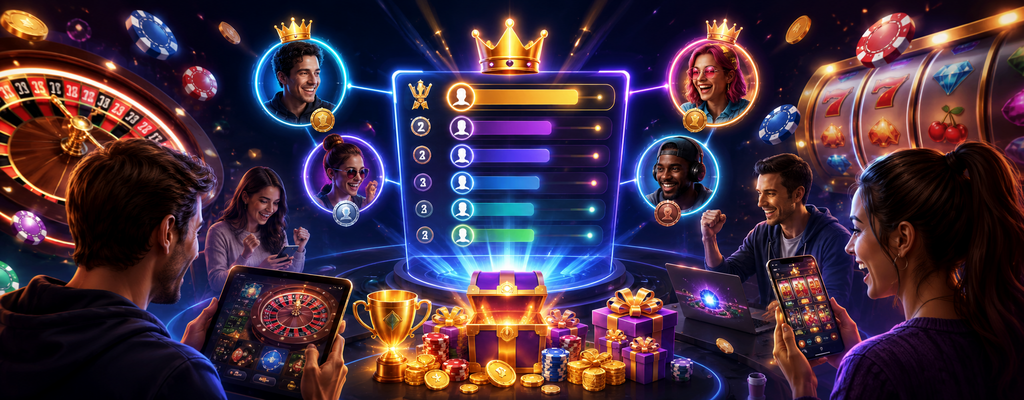
Social Leaderboards
Community-driven competitions that allow players to compete against their peers for exclusive weekly incentives, fostering a sense of digital community. Historically, online casino gaming has been a largely solitary experience, lacking the shared excitement found on a bustling physical casino floor. Leaderboards bridge this gap by transforming individual gameplay into a highly engaging, multiplayer event. By participating in opt-in tournaments—such as accumulating the highest multiplier on a newly launched slot or winning the most consecutive hands in live dealer roulette—players can track their real-time ranking against others.
This competitive edge taps directly into fundamental human psychology, driving engagement through social comparison and the desire for status. These shared events often feature pooled prize drops, ranging from significant cash rewards to exclusive merchandise, which organically incentivizes longer session times and builds a loyal, interconnected user base that returns weekly to defend their standing.
A Push for Transparent and Fair Terms
As regulatory frameworks tighten and consumer awareness grows, the structure of digital incentives has had to mature. Modern players are highly educated on the mechanics of playthrough requirements, game weightings, and withdrawal limits.
In response, 2026 has seen a massive surge in “no-wager” free spins and flat cashback offers. Operators are finding that transparent, easy-to-understand promotions build significantly more brand loyalty and consumer trust than massive deposit matches hidden behind complex, restrictive terms and conditions.
The Future of Player Retention
The evolution of player incentives in 2026 highlights a broader shift in digital marketing: consumers across all sectors are demanding value, personalization, and transparency. The platforms that succeed will be those that view promotions not just as a temporary acquisition gimmick, but as an integral, ongoing component of the user experience. As AI and mobile tech continue to advance, we can expect the line between digital gaming and traditional rewards to blur even further, creating a highly tailored entertainment ecosystem for every user.